
Summarize this post with AI
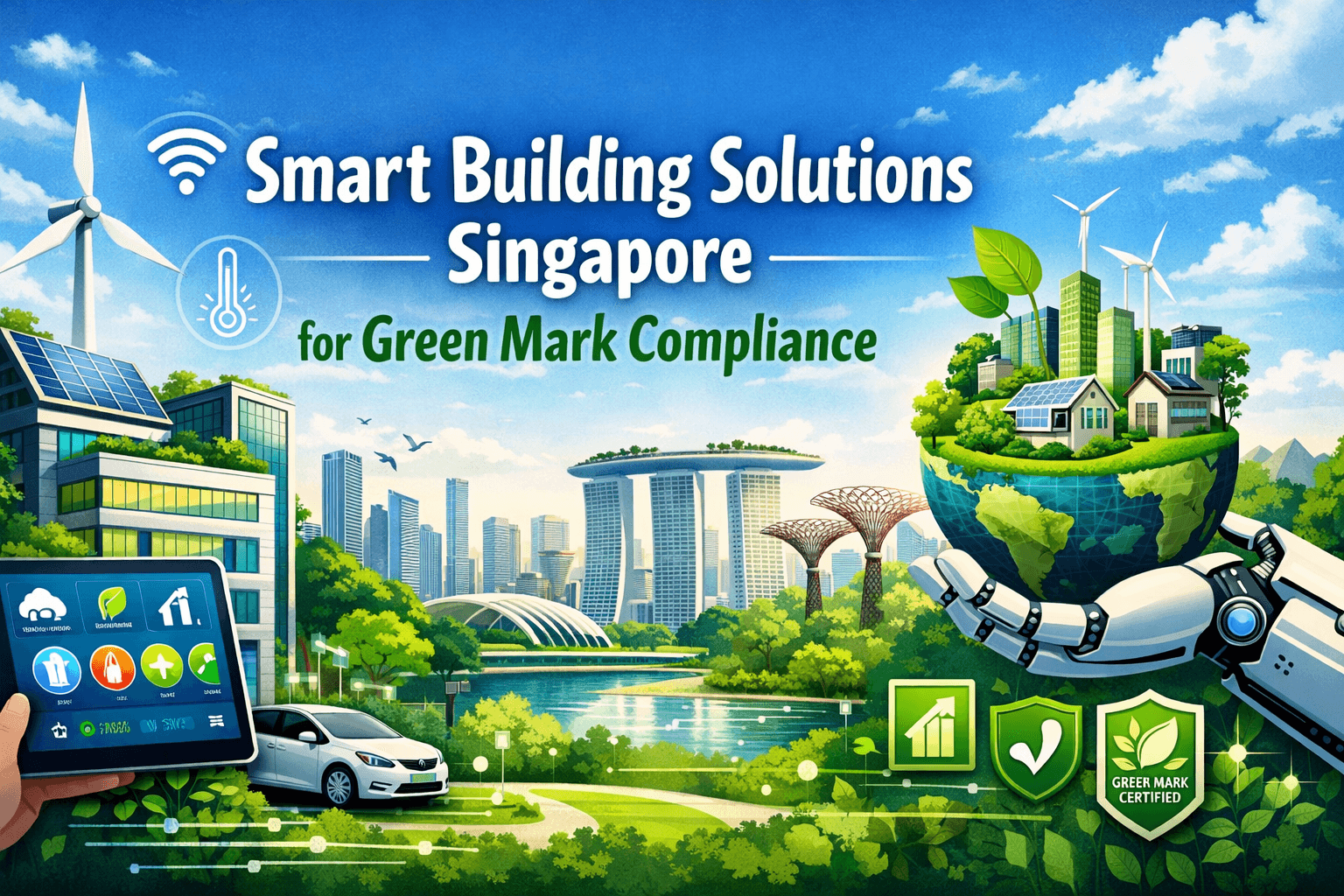
Smart building solutions Singapore enterprises deploy today are centered on measurable energy performance, AI-driven monitoring, and IoT-based infrastructure optimization. For organizations targeting Singapore Green Mark certification, compliance increasingly depends on energy efficiency AI, predictive analytics, and automated building controls.This analyst brief evaluates five categories of smart building technology IoT platforms that enable AI energy optimization Singapore initiatives. It compares AI building analytics capabilities, property management integration, and smart energy reduction strategies relevant to B2B leaders, IT teams, and operations heads.
Key Takeaways
Green Mark compliance increasingly depends on AI-driven energy analytics.
Smart building technology IoT enables real-time building performance visibility.
Energy efficiency AI reduces operational expenditure through predictive optimization.
Integrated property management systems improve cost and pricing decisions.
Vendor selection should prioritize analytics depth over dashboard features.
What This Means in 2026
Singapore’s Green Mark framework now emphasizes measurable energy intensity reduction, smart monitoring, and carbon reporting transparency.
Smart building solutions Singapore organizations adopt must therefore integrate:
AI building analytics for real-time performance benchmarking
AI energy optimization Singapore platforms for automated load balancing
Smart energy reduction strategies tied to HVAC, lighting, and occupancy
In 2026, standalone IoT sensors are insufficient. Enterprise systems must connect building operations, financial modeling, and property management workflows into a unified AI layer.
Assess Your AI Readiness With Confidence
Core Comparison / Explanation
How Do Leading Smart Building IoT Categories Compare?
Category | Core Function | AI Depth | Property Management Integration | Best For |
AI-Driven Property Management (e.g., Samta.ai) | Predictive pricing modeling + portfolio analytics | Advanced ML forecasting | Native integration with property management & AI price prediction | Large portfolios |
Smart Energy Monitoring Platforms | Real-time consumption tracking | Moderate anomaly detection | Limited | Mid-size facilities |
HVAC Automation Systems | Climate optimization | Rule-based AI | Minimal | Single buildings |
AI Building Analytics Suites | Performance benchmarking | Advanced pattern recognition | Partial | Multi-site enterprises |
IoT Sensor Networks | Data capture layer | Low | None | Infrastructure upgrades |
Organizations using platforms such as Samta.ai combine AI building analytics with predictive pricing models like Real Estate Pricing Prediction to align operational efficiency with revenue optimization.
For residential and rental portfolios, AI-enabled property management tools such as Homzhub integrate smart energy reduction strategies with pricing insights.
Practical Use Cases
Energy Optimization Across Portfolios
AI energy optimization Singapore tools dynamically adjust cooling loads based on occupancy and weather patterns.Property Management Cost Alignment
Energy data integrates with AI price predict systems to improve rental yield modeling. Advanced data science applications in real estate portfolios, such as those outlined in Top 10 Data Science Use Cases for Luxury Property Developers, demonstrate how operational data drives measurable financial outcomes.Enterprise ESG Reporting
AI building analytics platforms generate audit-ready sustainability reports.Predictive Maintenance
Smart building technology IoT sensors detect equipment inefficiencies before failure.
Limitations & Risks
High initial integration cost across legacy infrastructure
Data silos between facility management and finance systems
Over-reliance on dashboards without predictive capability
AI model bias if historical energy data is incomplete
Smart building solutions Singapore deployments fail when AI systems are not integrated into operational workflows.
Get a Clear View of Your AI Model Risk Exposure
Decision Framework
When Should Enterprises Deploy AI-Driven Smart Building Systems?
Use when:
Managing multi-property portfolios
Targeting Green Mark certification
Seeking energy efficiency AI for measurable ROI
Integrating property management with pricing intelligence
Avoid when:
Operating single small facilities
Lacking IoT data infrastructure
No ESG reporting requirement
How US Enterprises Approach Smart Building IoT
US enterprises adopt smart building IoT as part of broader digital transformation and ESG strategies. Large organizations integrate IoT sensors with centralized data platforms to optimize HVAC, lighting, and occupancy management in real time. Decision-making is typically led by CIOs, facility heads, and sustainability officers, with a strong focus on energy cost reduction, predictive maintenance, and operational efficiency. Enterprises increasingly use AI-driven analytics to transform building data into actionable insights, ensuring measurable ROI and alignment with corporate sustainability targets.
How Singapore Companies Handle Smart Building Solutions
Singapore companies take a government-aligned, efficiency-first approach to smart buildings, driven by initiatives like Ebm Singapore and national sustainability goals. Enterprises prioritize energy optimization, compliance, and smart infrastructure integration, often leveraging IoT platforms to monitor energy usage and reduce carbon footprint. Leadership teams focus on centralized control systems and data transparency, ensuring buildings meet regulatory expectations while improving operational performance in high-density urban environments.
Conclusion
Smart building solutions Singapore enterprises deploy in 2026 must integrate smart building technology IoT, AI building analytics, and energy efficiency AI into a unified operational model. Green Mark compliance is no longer sensor-driven; it is analytics-driven. Measurable energy reduction, predictive modeling, and portfolio-level visibility are now core requirements.Organizations seeking deeper integration between property management and energy optimization can leverage AI and ML expertise from Samta.ai. By combining AI energy optimization Singapore capabilities with predictive valuation intelligence, enterprises can align sustainability goals with revenue performance. Solutions such as Real Estate Pricing Prediction enable AI price predict models to incorporate energy performance, occupancy behavior, and market demand into portfolio decisions. When smart energy reduction strategies are directly connected to pricing and property management systems, sustainability becomes a measurable financial advantage rather than a compliance obligation.
About Samta
Samta.ai is a Singapore headquartered AI product engineering and data intelligence partner helping enterprises build production grade AI systems for regulated and data intensive environments. We help organizations move beyond experimentation by engineering scalable, explainable, and enterprise ready AI solutions, from data foundations and model development to workflow automation and deployment.
Our capabilities combine deep AI expertise, data engineering, and product engineering to deliver measurable business impact across FinTech, BFSI, cybersecurity, regulatory technology, and enterprise operations.
Our enterprise AI products power real world intelligence systems:
TATVA: AI driven data intelligence platform for governed analytics, monitoring, and operational insights
VEDA: Explainable and audit ready AI decisioning engine built for compliance sensitive enterprise workflows
CORA Property Management Solutions: Predictive intelligence platform for real estate pricing, portfolio optimization, and investment analytics
Backed by ecosystem partnerships with Microsoft, Databricks, and Snowflake, Samta.ai delivers agile, cost efficient AI engineering with faster turnaround and enterprise grade scalability. Samta.ai embeds AI governance, data privacy, and compliance by design principles directly into the AI lifecycle, enabling organizations to scale AI with transparency, accountability, and operational control.
Turn AI Readiness Into a Clear Action Plan
FAQs
What are smart building solutions Singapore enterprises use for Green Mark?
They combine smart building technology IoT sensors, AI building analytics, and energy efficiency AI platforms to monitor, predict, and optimize energy consumption while meeting certification standards.
How does energy efficiency AI reduce operational costs?
Energy efficiency AI analyzes historical usage, weather patterns, and occupancy data to automate HVAC and lighting adjustments, reducing energy waste and lowering utility expenses.
Can AI building analytics integrate with property management systems?
Yes. Advanced platforms integrate energy insights with property management tools and AI price predict models, aligning operational efficiency with revenue optimization strategies.
Is IoT alone enough for Green Mark compliance?
No. IoT sensors provide data, but AI energy optimization Singapore systems are required to convert that data into measurable efficiency improvements.
How does AI price prediction relate to smart buildings?
Energy costs influence rental pricing and yield models. Integrating AI price predict tools ensures property management decisions reflect both energy performance and market demand.