
Summarize this post with AI
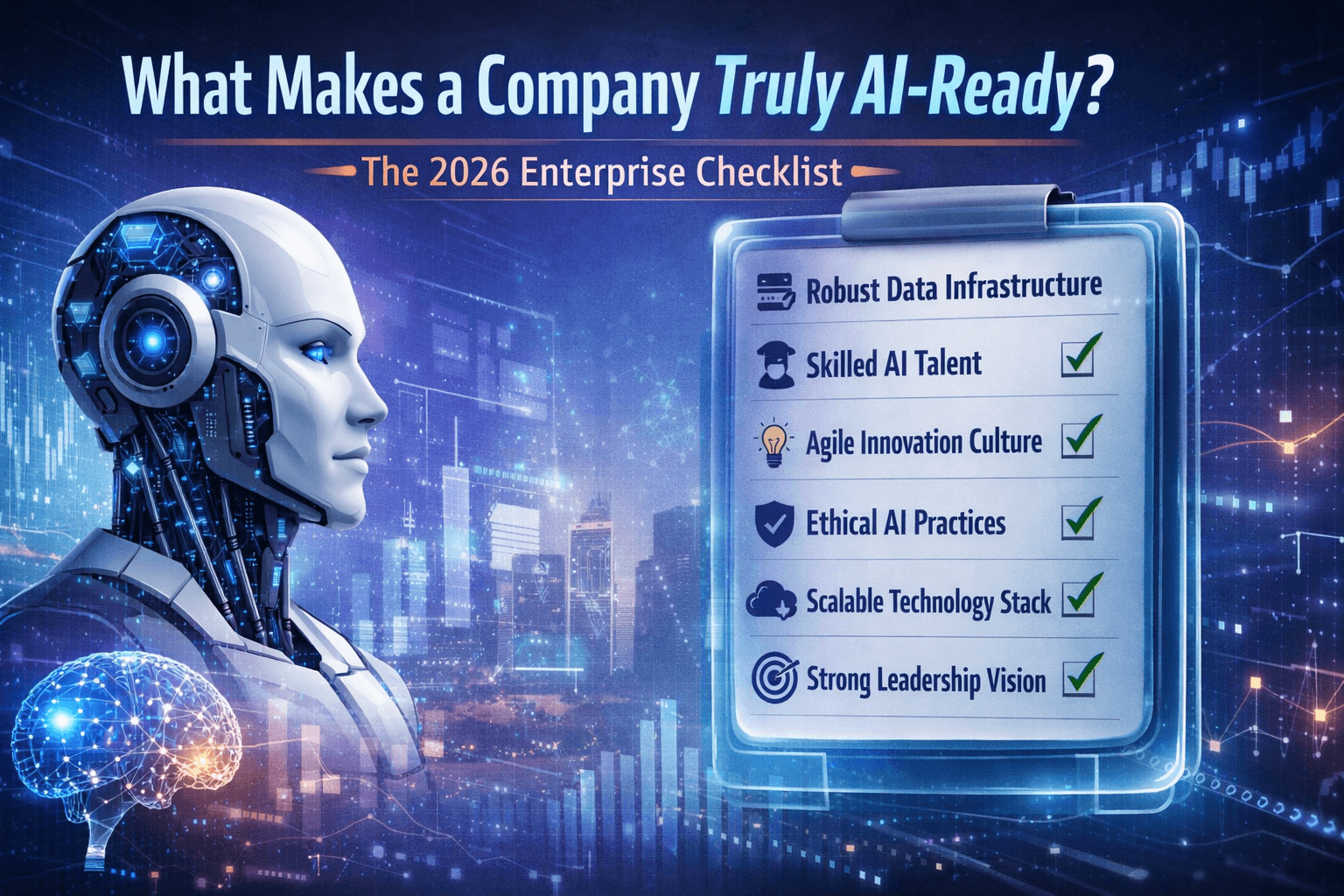
Determining What Makes a Company Truly AI ready is the foundational challenge for business leaders today. To succeed, identifying the best company for ai ready data solutions is critical for transitioning from isolated pilots to scalable automation. Without a deeply integrated ai ready data infrastructure, organizations risk severe operational latency and unreliable model outputs. True readiness means transforming fragmented datasets into structured, deterministic pipelines that govern high-stakes decision-making securely. By partnering with experts in machine learning and data architecture, B2B enterprises can systematically eliminate systemic friction. This strategic alignment ensures every algorithm deployed operates on verified institutional facts, securing long-term operational resilience and establishing a distinct competitive advantage in complex, regulated global markets.
Key Takeaways
Build a centralized ai ready data infrastructure to unify enterprise datasets.
Implement a structured AI readiness framework before deploying production models.
Establish robust ai risk management protocols to maintain compliance and governance.
Partner with experts capable of delivering large-scale enterprise ai implementation.
Align organizational culture with AI adoption to ensure operational scalability.
What This Means for Enterprises in 2026
AI adoption has moved beyond experimental pilots. Today, enterprises must transition from proof-of-concept experiments to secure production environments.
This means evaluating not only technology stacks but also organizational readiness. Companies must develop both an infrastructure strategy and an operational framework that supports AI-driven decision making.
Organizations building ai ready data infrastructure typically begin by modernizing their data pipelines and governance policies. For example, companies exploring enterprise ai implementation often follow a structured deployment roadmap similar to the approach outlined in this guide to AI implementation roadmap enterprise.
However, technical upgrades alone are not enough. Enterprises must also cultivate an internal culture that understands how AI systems influence workflows, decisions, and accountability structures.
According to research published by IBM, nearly 70% of AI projects fail to reach full deployment, often due to poor data governance or fragmented infrastructure. For deeper insights into these challenges, this analysis on why 70 of ai initiatives fail explores the structural barriers that prevent scaling.
Core Comparison: Legacy vs AI-Ready Architecture
Infrastructure Feature | Legacy Data Architecture | AI-Ready Architecture | Enterprise Impact | Strategic Outcome |
|---|---|---|---|---|
Data Silos | Highly Fragmented | Centralized / Unified | Faster Model Training | Enables unified enterprise data access and reliable model development |
Processing Speed | Batch Processing | Real-Time Ingestion | Low-Latency Decisions | Supports real-time analytics and faster operational decision-making |
Governance Mode | Manual Auditing | Automated Guardrails | Regulatory Safety | Strengthens compliance oversight and reduces governance risk |
Scalability | Hardware Limited | Cloud / Edge Dynamic | Global Deployment | Allows scalable infrastructure for global AI deployment and growth |
Organizations investing in modern architectures often follow principles similar to those described in this framework for building an AI ready infrastructure.
Build Your Intelligence Foundation.
Get Your Free AI Readiness Assessment
Practical Use Cases of AI-Ready Enterprises
1. Predictive Maintenance
Manufacturing companies analyze IoT sensor data to detect machine anomalies before breakdowns occur. This reduces downtime and increases operational efficiency, demonstrating What Makes a Company Truly AI ready when real-time data and intelligent systems work together to prevent operational disruptions.
2. Automated Risk Profiling
Financial institutions apply machine learning to credit evaluation and fraud detection. With centralized data systems and strong ai risk management, models continuously adapt to changing risk patterns.
3. Supply Chain Forecasting
Global retailers use AI forecasting models to predict demand fluctuations, optimize shipping routes, and prevent inventory shortages.
4. Regulatory Compliance Monitoring
Organizations in regulated sectors deploy AI systems to review contracts, policies, and compliance documents. This reduces manual audit workloads and helps overcome many of the 5 biggest ai deployment hurdles organizations encounter during adoption.
5. Workforce Analytics
HR teams use machine learning insights to forecast hiring needs and workforce performance, often supported by an effective AI change management strategy that aligns employees with AI transformation initiatives.
Limitations and Risks
Despite the benefits, implementing AI systems comes with several operational challenges.
Data Quality Issues
Poorly structured legacy datasets can introduce bias and inaccuracies into machine learning models.
High Initial Investment
Restructuring enterprise data pipelines and infrastructure requires upfront investment in architecture modernization.
Operational Complexity
Without proper governance structures, organizations struggle to monitor model performance and decision outcomes.
For this reason, mature enterprises embed ai risk management frameworks early in their transformation journey.
Decision Framework for Enterprise Leaders
When to Accelerate Implementation
Accelerate deployment when:
Your organization is evaluating samtaai vs traditional dev approaches to scale automation securely.
Data volumes are growing rapidly and require automated intelligence systems.
Business operations depend on real-time insights derived from large data streams.
When Implementation Can Be Delayed
Delay deployment if:
The organization has not defined clear metrics for success. Establishing measurement frameworks like those described in this guide on how to measure ai success is essential before scaling AI programs.
Core operational data remains heavily siloed across departments or regions.
Conclusion
Achieving systemic readiness is an ongoing operational discipline rather than a singular IT project. Organizations that prioritize a resilient architecture effectively shield their operations from the volatility of rapid technological shifts. Securing these capabilities demands specialized machine learning engineering and rigorous data oversight to prevent algorithmic drift. Aligning with technical experts like samta guarantees that your transition into autonomous operations is structured, secure, and fact-based.
About Samta
Samta.ai is an AI Product Engineering & Governance partner for enterprises building production-grade AI in regulated environments.
We help organizations move beyond PoCs by engineering explainable, audit-ready, and compliance-by-design AI systems from data to deployment.
Our enterprise AI products power real-world decision systems:
Tatva : AI-driven data intelligence for governed analytics and insights
VEDA : Explainable, audit-ready AI decisioning built for regulated use cases
Property Management AI : Predictive intelligence for real-estate pricing and portfolio decisions
Trusted across FinTech, BFSI, and enterprise AI, Samta.ai embeds AI governance, data privacy, and automated-decision compliance directly into the AI lifecycle, so teams scale AI without regulatory friction.
Enterprises using Samta.ai automate 65%+ of repetitive data and decision workflows while retaining full transparency and control.
Samta.ai provides the strategic consulting and technical engineering needed to align your human capital with your AI goals, ensuring a frictionless and high-performance transition.
FAQs
What defines an AI readiness framework?
An AI readiness framework is a structured approach used to evaluate whether an organization’s technology, data systems, and operational processes are prepared for artificial intelligence adoption. It helps businesses identify gaps in infrastructure, governance, and workflows before deploying AI solutions.
Why is AI risk management important?
AI risk management ensures that automated systems operate responsibly and within regulatory boundaries. Strong governance practices reduce the chances of biased decisions, compliance violations, and operational risks when AI models influence critical business processes.
How do we initiate enterprise ai implementation?
The first step toward enterprise ai implementation is auditing existing data pipelines and identifying fragmented datasets. Organizations should evaluate how their infrastructure supports AI workloads before scaling automation initiatives.
What makes a data infrastructure AI-ready?
A modern data environment must provide reliable, real-time access to clean and unified datasets. This allows machine learning models to process information accurately and generate dependable insights. Organizations looking to understand this transition in more detail can explore this guide on building an AI-ready infrastructure