
Summarize this post with AI
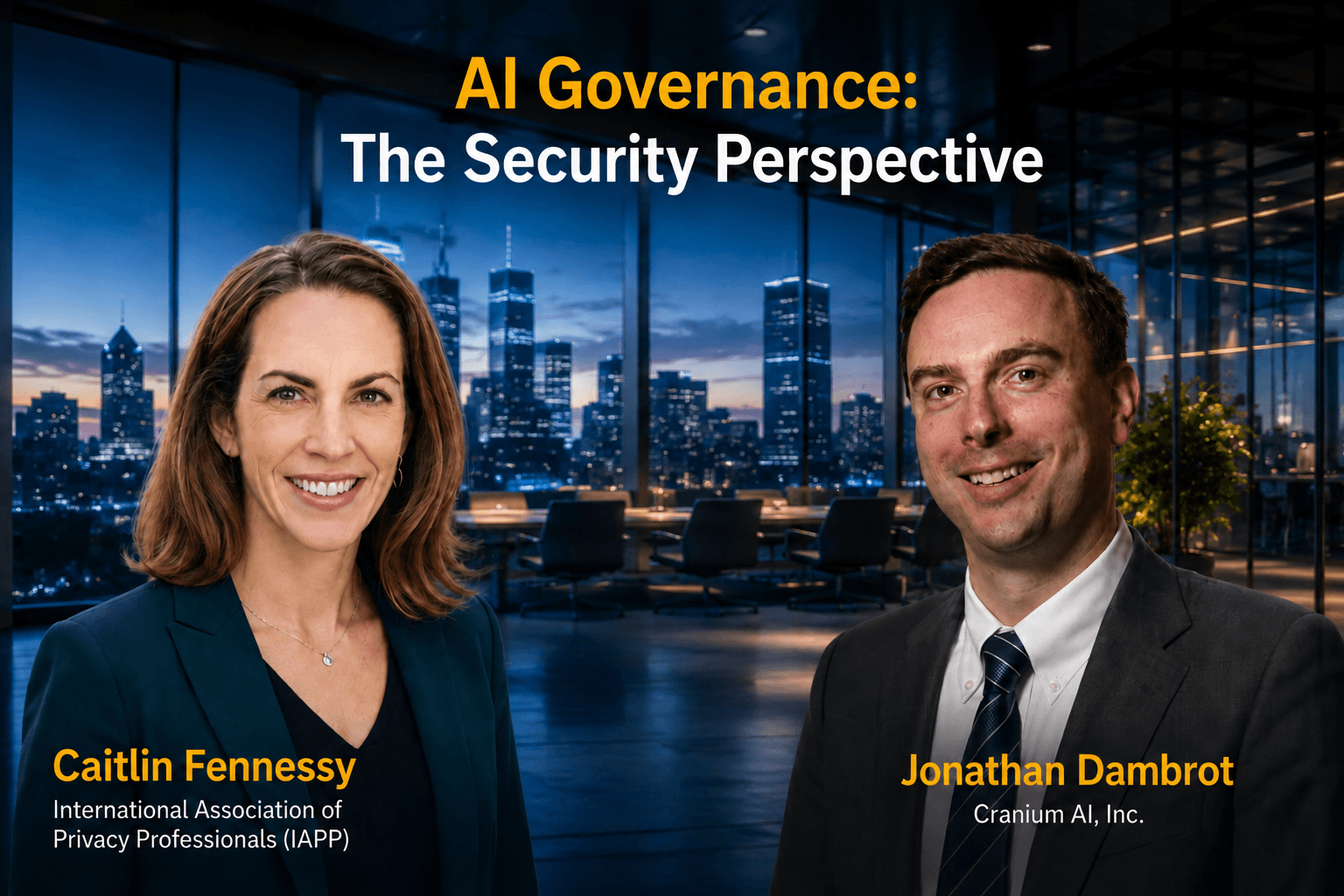
Enterprises are deploying AI faster than they can see it, and that single sentence captures the most dangerous governance gap of our era. Roughly 70% of companies have already deployed AI across their operations, yet most lack a centralized inventory of where that AI lives, who owns it, or how it behaves under adversarial conditions. According to insights shared by Caitlin Fennessy, Vice President and Chief Knowledge Officer at the IAPP, and Jonathan Dambrot, CEO of Cranium AI, at a featured RSA Conference session on AI governance from the security perspective, the majority of organizations do not understand what AI is being deployed internally, lack general controls around those systems, and face a severe shortage of knowledgeable AI governance professionals to fill leadership roles. The arrival of agentic AI, systems that do not just respond but plan, reason, and act autonomously across business workflows, transforms this visibility problem into a category one security threat.
TL;DR
~70% of enterprises have deployed AI but most lack centralized visibility or governance structures
Agentic AI operates as an autonomous actor, not a passive tool, fundamentally changing the risk profile
Shadow AI proliferation and undefined ownership create compounding governance failures
AI security threats including model extraction, data poisoning, and adversarial AI (MITRE ATLAS, OWASP LLM Top 10) remain poorly understood by most security teams
The EU AI Act and global regulatory frameworks are moving from voluntary to mandatory compliance rapidly
Enterprises are over-investing in AI capability while critically under-investing in AI risk management and governance infrastructure
AI Agents vs Agentic AI: Why the Distinction Matters
An AI agent is a discrete system designed to complete a specific task, like a customer support bot or a document classifier. Agentic AI is something fundamentally different. It describes AI systems that operate with multi-step autonomy, making sequential decisions, calling external tools, accessing live data, and executing actions across connected systems without human confirmation at each step.
In enterprise environments, agentic AI is already embedded in SOC automation pipelines, AI copilots inside financial products, procurement decision systems, and HR workflows. Jonathan Dambrot described a scenario at RSA that should concern every CISO: a large financial services organization deployed an AI copilot inside one of their products, and within one week, 5,000 employees were using it as a standard part of their workflow. Security teams had no visibility into it. That is not an edge case. That is the norm.
Start Your AI Transformation with a Data-Driven Assessment
The Paradigm Shift: From Tool to Autonomous Actor
Traditional enterprise AI governance frameworks were designed for a world where AI was a tool a human operated. A model produced an output. A person reviewed it. Governance meant documentation, approval workflows, and periodic audits.
Agentic AI breaks every assumption that framework was built on.
When an AI system can autonomously read emails, draft contracts, trigger API calls, and escalate decisions without human checkpoints, the governance model must evolve from review to real-time control. As Dambrot noted at RSA, visibility is one of the principal challenges today. People simply do not understand what is there in their own environments.
"Every organization is now an AI company. The question is whether they know what that means from a security and governance standpoint." Jonathan Dambrot, CEO, Cranium AI | RSA Conference, AI Governance from the Security Perspective
Core Risks of Agentic AI in the Enterprise
1. Invisible AI Systems and the Visibility Gap
The most dangerous AI in your enterprise is the one you do not know exists. Shadow AI proliferation, where teams deploy open source models, connect directly to LLM APIs, or activate AI features inside SaaS tools without IT or security review, creates an attack surface that no one is mapping. Without a centralized AI system inventory, you cannot govern what you cannot see. Caitlin Fennessy noted at RSA that not understanding what AI is being deployed in the company is one of the most basic and urgent challenges organizations face today.
2. Unauditable Autonomy
Agentic AI systems make decisions in real time across sequences of actions. Unlike traditional software, there is no clean audit trail of why a specific decision was made. When an agentic AI denies a loan, flags a transaction, or routes a support case, accountability collapses without structured model governance and logging infrastructure in place.
3. Cognitive Offloading and Human Judgment Erosion
As agentic AI embeds deeper into workflows, human oversight atrophies. Operators stop questioning outputs. Teams lose the ability to catch errors. When general controls around AI are absent, cognitive offloading becomes a direct operational liability that compounds with every new autonomous system added to the environment.
4. Model-Level Attacks via MITRE ATLAS and OWASP LLM Top 10
AI security risks in enterprises go well beyond traditional cybersecurity threat models. Data poisoning can corrupt a model's behavior at training time. Model extraction attacks allow adversaries to reconstruct proprietary models through repeated queries. Prompt injection exposes agentic AI systems to manipulation through untrusted inputs. The MITRE ATLAS framework catalogs these adversarial AI risks, yet as Dambrot noted at RSA, very few security professionals can identify those risks or articulate how they are relevant to their organization's specific AI stack. The OWASP LLM Top 10 provides the parallel lens for generative AI deployments.
5. AI Supply Chain Risk
If your organization is consuming AI as a service, you inherit the risk profile of every model and API in that supply chain. Dambrot was direct at RSA: sending data to a third party that uses AI introduces data leakage, undisclosed training practices, and model update risks that most vendor management programs are not equipped to assess. This is one of the bigger agentic AI security risks most enterprises have not yet addressed formally.
6. AI Hallucination as Operational Risk
Dambrot referenced the Air Canada hallucinating chatbot case at RSA as a live example of how AI inaccuracy translates directly into business and legal exposure. When an agentic AI acts on confidently wrong output without human review, the damage is financial, reputational, and increasingly regulatory. Samta.ai's analysis on AI hallucination risk controls covers mitigation strategies in detail.
7. Undefined Ownership and Governance Fragmentation
Who owns AI governance in your organization? The CISO? Legal? Data? Privacy? According to IAPP global survey data presented by Fennessy at RSA, only about 30% of organizations had established an AI governance function at the time of the survey. The reality in most organizations is a committee of siloed stakeholders who lack a shared vocabulary, resulting in dangerous blind spots in some areas and duplicated effort in others. As Fennessy described it: it feels like multiple surgical teams operating on one patient without talking to each other.
Strategic Insight
This is not an AI risk problem. This is a visibility and control failure.
Organizations are making enormous investments in AI capability while investing a fraction of that budget in the governance, security, and monitoring infrastructure required to make those systems trustworthy. Gartner research cited at the RSA session found that the single strongest driver of AI governance framework adoption is financial metrics tied to AI programs. When there is no ROI accountability for governance, governance does not get funded.
Understand Your AI Model Risk Profile
The Verifiable Agency Framework
To operationalize enterprise AI governance in the age of agentic systems, organizations need a structured approach that goes beyond policy documents. We propose the Verifiable Agency Framework, built on four pillars that align directly with the NIST AI Risk Management Framework and EU AI Act obligations.
Visibility: Maintain a live, continuously updated inventory of every AI system, model, API connection, and third party AI service in use across the enterprise, including shadow AI discovered through network and code repository scanning.
Accountability: Assign clear ownership for every AI system. Define who is responsible for its behavior, its data inputs, its outputs, and its failure modes. Embed AI ownership into existing governance structures across the CISO, CTO, legal, privacy, and data functions.
Control: Implement real-time monitoring of model behavior, API access patterns, and output anomalies. Extend existing RBAC frameworks to AI systems. Apply AI risk classification frameworks to determine which systems require continuous monitoring versus periodic review.
Continuous Validation: Conduct ongoing AI red-teaming adapted specifically for agentic and generative AI contexts. As Dambrot explained at RSA, AI red-teaming is not the same as traditional red-teaming. LLM providers often prohibit direct adversarial testing against production systems, requiring novel simulation techniques. Align validation practices to NIST AI RMF, MITRE ATLAS, and the OWASP LLM Top 10.
Common Enterprise Mistakes That Amplify Hidden Risk
Treating AI like traditional software is the single most common and costly mistake. AI systems are probabilistic, they drift, they can be manipulated at the model level, and their behavior changes when an underlying model is updated by a third party provider. Standard SDLC governance does not address any of this.
Beyond that, organizations consistently treat governance as an afterthought, initiating AI risk management programs only after an incident or a regulatory inquiry. Over-reliance on experimentation without baseline security requirements before models go live, and ignoring the AI security maturity gap, compounds the exposure further. Our AI governance framework 2026 guide provides a structured starting point.
The Human Dimension and Regulatory Reality
Caitlin Fennessy was unambiguous at RSA: the IAPP estimates the profession will need tens of thousands of AI governance professionals in the very near term, and they do not yet exist in sufficient numbers. Security professionals with cross-functional fluency across data science, legal, privacy, and AI security are the closest analog to what organizations need, and they are in critically short supply.
On the regulatory front, the EU AI Act is now in force, carrying fines of up to 7% of global annual turnover for non-compliance. US states are legislating rapidly, with California, New Jersey, and New York already issuing specific executive orders. The NIST AI Risk Management Framework remains the most widely adopted voluntary standard globally, but the direction is unmistakably toward mandatory AI governance framework requirements. Organizations still treating governance as optional are already behind. Explore our full EU AI Act readiness guide and our AI governance platforms comparison to benchmark your approach.
Accelerate Your AI Journey with Expert Consulting
Conclusion
Agentic AI is not a future risk. It is operating inside your enterprise today, making decisions, connecting to systems, and consuming sensitive data in ways your governance and security teams may not fully see. The organizations that navigate this period without catastrophic failure are those that treat AI visibility, accountability, control, and continuous validation as non-negotiable infrastructure investments, not compliance checkboxes. The window to establish those controls before regulatory, adversarial, or operational consequences force the issue is narrowing fast. Your board will ask the question. Your answer needs to be ready before they do.
About Samta
Samta.ai is a Singapore-headquartered AI Product Engineering & Data Intelligence partner helping enterprises build production-grade AI systems for regulated and data-intensive environments.We help organizations move beyond experimentation by engineering scalable, explainable, and enterprise-ready AI solutions from data foundations and model development to workflow automation and deployment.
Our capabilities combine deep AI expertise, data engineering, and product engineering to deliver measurable business impact across FinTech, BFSI, cybersecurity, regulatory technology, and enterprise operations.
Our enterprise AI products power real-world intelligence systems:
• TATVA : AI-driven data intelligence platform for governed analytics, monitoring, and operational insights
• VEDA : Explainable and audit-ready AI decisioning engine built for compliance-sensitive enterprise workflows
• CORA-Property Management Solutions: : Predictive intelligence platform for real-estate pricing, portfolio optimization, and investment analytics
Backed by ecosystem partnerships with Microsoft, Databricks, Snowflake, and AWS, Samta.ai delivers agile, cost-efficient AI engineering with faster turnaround and enterprise-grade scalability. Trusted by enterprises across FinTech, BFSI, and digital transformation initiatives, Samta.ai embeds AI governance, data privacy, and compliance-by-design principles directly into the AI lifecycle , enabling organizations to scale AI with transparency, accountability, and operational control.
Enterprises leveraging Samta.ai automate 65%+ of repetitive data, analytics, and decision workflows while maintaining governance, explainability, and measurable business outcomes. Samta.ai provides the strategic consulting, AI engineering, and data modernization expertise needed to align enterprise operations with next-generation AI transformation goals.
Frequently Asked Questions
What is the hidden risk of agentic AI?
The hidden risk of agentic AI is the combination of invisible deployment, unauditable autonomy, and adversarial vulnerability that emerges when AI systems operate across enterprise workflows without centralized visibility or governance controls. Most organizations do not know where their agentic AI systems are, who owns them, or how they behave under attack.
What is the difference between agentic AI and AI agents?
An AI agent is a discrete system designed to complete a specific task. Agentic AI refers to systems that operate with multi-step autonomy, making sequential decisions and executing actions across interconnected systems without requiring human confirmation at each step. The governance and security implications are fundamentally different.
What are AI security risks in enterprises?
Key enterprise AI security risks include data poisoning, model extraction, adversarial prompt injection, AI hallucination leading to operational or legal exposure, AI supply chain vulnerabilities, and shadow AI proliferation. These are cataloged in MITRE ATLAS and the OWASP LLM Top 10.
How can AI become a security risk in an organization?
AI becomes a security risk when it is deployed without centralized visibility, when model behavior is not monitored in production, when third party AI services introduce data leakage, and when agentic AI systems operate without human oversight checkpoints across sensitive business workflows.
What is enterprise AI governance?
Enterprise AI governance is the structured set of policies, processes, roles, and technical controls an organization uses to ensure AI systems are deployed safely, accountably, and in compliance with applicable regulations. Effective frameworks address visibility, risk classification, ownership accountability, continuous validation, and alignment to the EU AI Act and NIST AI RMF.